Someone selling a horse sends us the same message every few weeks. It usually opens "I can't sell my horse" and goes on: the advert has been up for a month, it has had plenty of views and almost no enquiries, and is the price wrong? Usually it isn't. What is wrong is that the advert answers none of the four or five questions a buyer has to settle before they will spend a Saturday driving to see a horse.
Most advice on how to sell a horse starts with the price, and the price is rarely the variable. Selling a horse well is mostly an exercise in pre-empting questions. A buyer scrolling a hundred adverts is not reading yours — they are eliminating it. Every fact you leave out is a reason to move on, because the next advert probably has it. What follows is what buyers actually ask for after they have seen a listing, drawn from the enquiries that come through this site.
Selling a horse is a screening problem, not a shopping one
Watch how a serious buyer uses a sales page and the behaviour is obvious: they filter hard, open a handful, and reject most within about ten seconds. They are looking for disqualifiers first — wrong height, wrong age, too far away, no price — and only then for reasons to be interested.
That order matters, because it means the boring facts do more work than the flattering prose. Height, age, sex, breed or type, location, and price are the screen. If any of them is missing the horse fails the filter before its temperament, its movement or its jump ever gets considered.
The most common mistake is treating "price on application" as a negotiating position. It reads as one of two things: either the horse is expensive and the seller is embarrassed, or the seller wants your phone number more than they want to sell the horse. Both cost you the buyers who were qualified and busy.
Height, age, sex, price, postcode — then everything else
Lead with the specification and put it where a phone screen shows it without scrolling. A buyer who knows within two seconds that this is a 16.1hh eight-year-old gelding in Lower Saxony at €18,000 can decide to keep reading. A buyer who has to hunt for the height will not hunt.
Then answer the questions that come next, in roughly the order buyers ask them:
- What has it actually done? Not "has scope for more" — what classes, at what height, when, and placed where. A horse that has competed unaffiliated at 1.00m and been placed is a real thing. A horse with "unlimited potential" is a horse with no record.
- Why are you selling? Buyers assume the worst if you skip it. "Owner going to university" and "outgrown by my daughter" are ordinary and reassuring. Silence is not.
- How does it live, and how does it behave doing ordinary things? Hacks alone or in company, loads, clips, shoes, stands for the farrier, turned out with others, stabled at night. This is the section that stops time-wasting viewings, because most horses fail on one of these and the buyer who needs that one will self-select out.
- Is there any history? Injuries, time off, ongoing management, anything a vetting will find.
That last one is where sellers get nervous, and it is worth being precise about the risk, because the instinct to leave it out is the expensive instinct.
What you must not say, and what you need not volunteer
The legal position differs by country and by whether you are selling privately or in the course of a business, and that difference is larger than most sales adverts assume. Broadly, in a private sale in England and Wales a seller is not under a general duty to disclose a defect they genuinely do not know about — but a false statement of fact about the horse is a misrepresentation, and a buyer who relied on it has a claim. Jacksons Law sets out the elements of an equine misrepresentation claim; a trade seller carries considerably more. Germany runs on a different instrument again, and a Kaufvertrag with a warranty exclusion does not exclude what the seller knew and concealed.
The practical rule that survives every jurisdiction: do not write a sentence you could not defend under questioning, and do not describe a horse as something you have not seen it do. "Never had a lame day" is a claim about the whole history of an animal. "Sound in the two years I have owned him, no vet visits other than routine" is a claim about what you know, and it is the one you can stand behind.
Disclosing a healed injury with the scan report attached loses you the buyers who were never going to complete anyway, and keeps the ones who will. Concealing it gets you an aborted sale at the vetting stage at best, and a claim at worst.
Photographs and video decide the shortlist
The written advert survives the screen; the media wins the viewing. A conformation shot standing square on a level surface, from the side, with the horse's whole outline visible and nothing cropped, is worth more than twenty action shots. Buyers use it to check the thing they cannot ask about politely — whether the horse is put together the way the description implies.
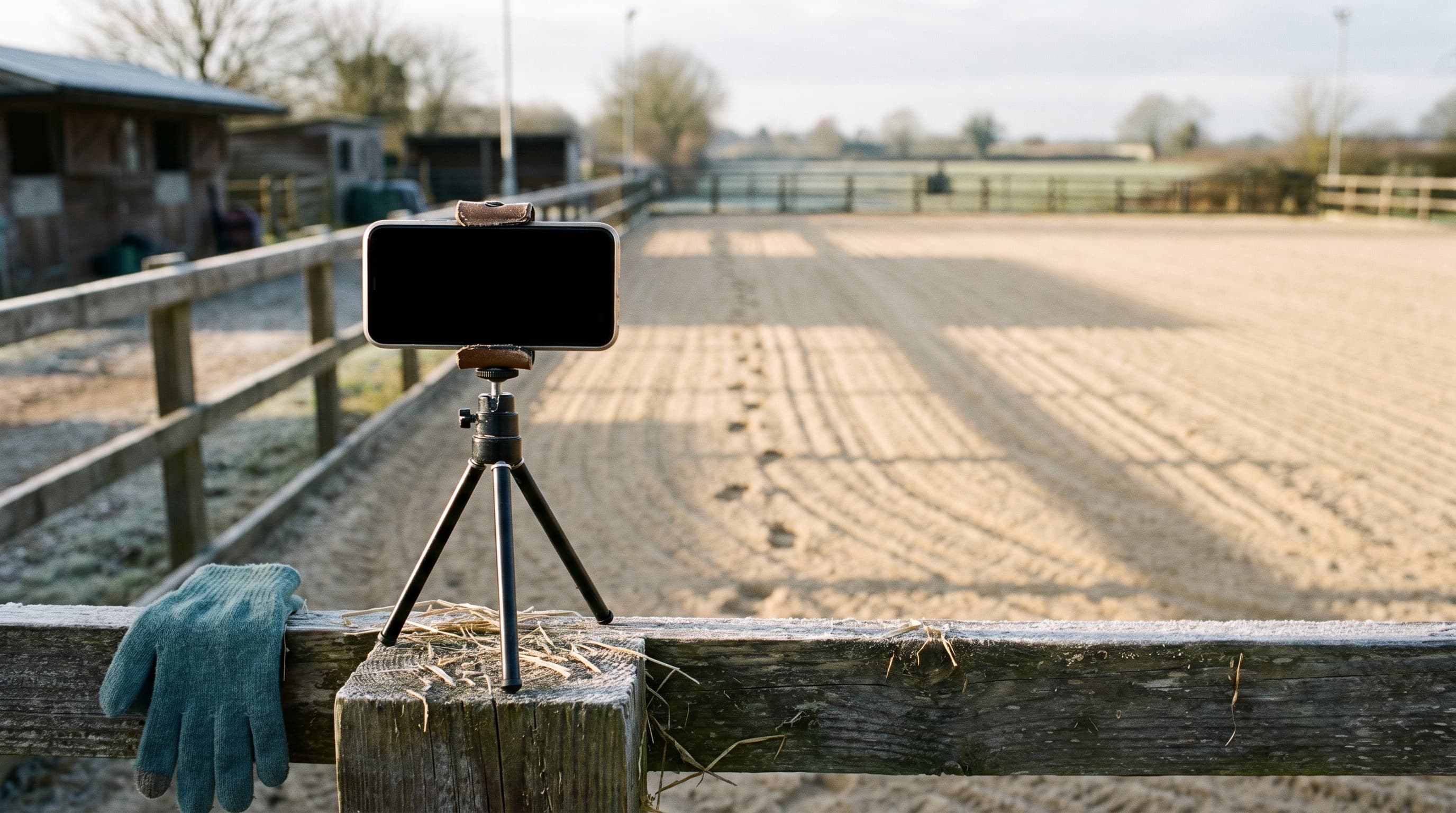
Then video, unedited and long enough to be evidence rather than a trailer. Walk, trot and canter on both reins, in one continuous clip, on a surface you would ride on normally. Music and cuts read as concealment even when they are not, because the first thing an experienced buyer does with an edited video is wonder what happened in the cut.
If the horse jumps, show a grid or a small course, including the bad one. A horse that has a fence down and carries on is a more attractive proposition than a horse in four flattering stills.
Be ready for the vetting before you advertise
The sale that collapses at the vetting almost never collapses because of what the vet found. It collapses because nobody had agreed who was paying, which vet, what stage of examination, and what would happen if something turned up. Settle all four before the first viewing, and say in the advert that the horse is available for a vetting at the buyer's expense — it signals that you expect one, which is itself reassuring.
Have the passport to hand and check it matches the horse, including the microchip. Have the vaccination record. If you have radiographs from a previous purchase or an insurance claim, decide now whether you are offering them, because being asked and hesitating looks worse than either answer. Our piece on what a five stage vetting actually covers is a reasonable thing to send a buyer who has never commissioned one.
How the money moves is part of the advert
Say how you will take payment, especially if the horse is likely to sell to a buyer travelling from another country. Sellers lose sales by being vague here and then appearing to improvise, which reads exactly like the opening of a scam to a buyer who has been warned about horse sale fraud all week.
Cash on collection is fine and common. A bank transfer before the horse moves asks the buyer to trust you completely, and a cautious buyer will decline. Holding the money with a third party until the horse and the paperwork have both arrived is what an escrow service is for: it does not make the horse sound, and it does not make the description true — the vetting and the written description do that — but it does remove the "who pays first" standoff that kills cross-border sales. Our fees are on the pricing page; quote them from there rather than from memory, because they change.
Whatever you agree, write the sale down. A short horse sale contract naming the horse, its passport number, the price, the date, what was said about it and what was excluded protects the seller at least as much as the buyer. The dispute you are avoiding is the one six weeks later about what you promised.
If it still isn't selling
Give a corrected advert three or four weeks before concluding anything. Then look at it in this order: is the specification complete and visible, is there a straight video, is the history stated, and is the price inside the range that comparable horses with a comparable record are actually advertised at in your region. The price is last on that list on purpose. Most stale adverts are not overpriced, they are under-informative, and the cheapest fix is the one that costs nothing.
If the horse is genuinely specialised — an older schoolmaster, a broodmare, a project — the sale pages may be the wrong instrument, because you are waiting for a narrow buyer to arrive. Posting on the wanted board works the other way round: buyers describe what they are looking for, and you answer the ones that match. For anything mainstream, though, the traffic is already on the sale pages, and the advert is the variable you control.
The short version of selling a horse online: write the advert for the buyer who is trying to eliminate it. Give them nothing easy to eliminate it on, and the enquiries you get will be from people who have already decided the horse might be right — which is the only kind of enquiry worth answering on a Sunday evening.