Your pony comes in from the field, stands with its front feet pushed out ahead of it and its weight rocked back onto its heels, and will not walk across the yard. Laminitis in horses is a painful failure of the tissue that holds the pedal bone inside the hoof, and the American Association of Equine Practitioners says to treat a suspected case as a medical emergency and call your vet straight away. The trouble usually starts somewhere other than the foot, most often in the horse's hormones.
This is for the owner who has just seen something wrong, or who keeps a native pony and wants to know what to watch for. It starts with the signs that mean you ring the vet now, then explains what laminitis is, the endocrine cause most cases share, why the grass risk does not end in spring, and what your vet and farrier will do. It is not veterinary advice: the diagnosis, the drugs and the plan are your vet's.
Signs of laminitis in horses: when to call the vet now
Call the vet the same hour if your horse shows any of the acute signs the AAEP lists in its owner guide, Learn to recognize the signs of laminitis. Do not wait to see whether it walks off. The AAEP's own words are that the sooner treatment begins, the better the chance of recovery.
- lameness, especially when the horse turns in a circle, or shifting weight from foot to foot while standing
- heat in the feet
- an increased digital pulse in the feet
- a reluctant, hesitant walk, as if on eggshells
- the "sawhorse stance": front feet stretched out in front to take pressure off the toes, and the hind feet placed differently from normal to carry more of the weight
The rocked-back stance is the picture everyone knows, and it is only one line of that list. A horse that is merely footsore on a turn, or has a pulse you can feel in its feet when you normally cannot, is reason enough to ring. The AAEP adds a second list for long-standing laminitis: rings in the hoof wall that widen from toe to heel, bruised or dropped soles, a widened white line and a thick, cresty neck.
What to do while you wait for the vet
Keep the horse still and off grass. Manitoba's agriculture department, in its owner guide to laminitis as a serious, crippling disease, advises taking away all grain feed and pasture, feeding only grass hay until the vet says otherwise, standing the horse on soft ground such as sand or shavings, encouraging it to lie down, and not exercising it. It also warns against starving the horse, which carries its own risk.
The old advice to walk a laminitic horse is wrong. A veterinary review of acute management, Mitchell, Fugler and Eades (2015), says confining the horse to a well-bedded stable reduces the stress that movement puts on the damaged laminae. Do not give any medicine your vet has not prescribed for this episode.
What laminitis is, and why the cause is usually elsewhere
Laminitis is a failure of the laminae, the interlocking tissue that bonds the hoof wall to the pedal (coffin) bone. When they weaken, the bone can rotate or sink inside the hoof. The AAEP's guide puts the key point plainly: although laminitis occurs in the feet, the underlying cause is often a disturbance elsewhere in the horse's body.
American owners often call it founder. Manitoba's guide draws the line most vets use: acute laminitis is the sudden attack of pain and inflammation, while founder usually means the long-term condition after the pedal bone has rotated. So founder in horses is the stage you are trying to prevent by calling early.
That leaves the question of what causes laminitis in horses. The Merck Veterinary Manual's chapter, reviewed in June 2024, calls endocrine dysfunction "probably the most common underlying cause of laminitis in horses today". The other routes it lists are severe inflammatory illness such as colitis or an infected uterus after foaling, a large overload of grain, some drugs including corticosteroids, plant poisoning, and a single limb forced to carry the horse's weight when the opposite leg is injured.
The endocrine cause most cases share
In a Finnish hospital study, Karikoski and colleagues (2011) tested 36 horses brought in for laminitis and found evidence of an endocrine disorder in 89% of them. The two disorders behind this are equine metabolic syndrome (EMS) and pituitary pars intermedia dysfunction (PPID), the condition owners know as Cushing's. Your vet can test for both, and either one changes how the laminitis is managed.
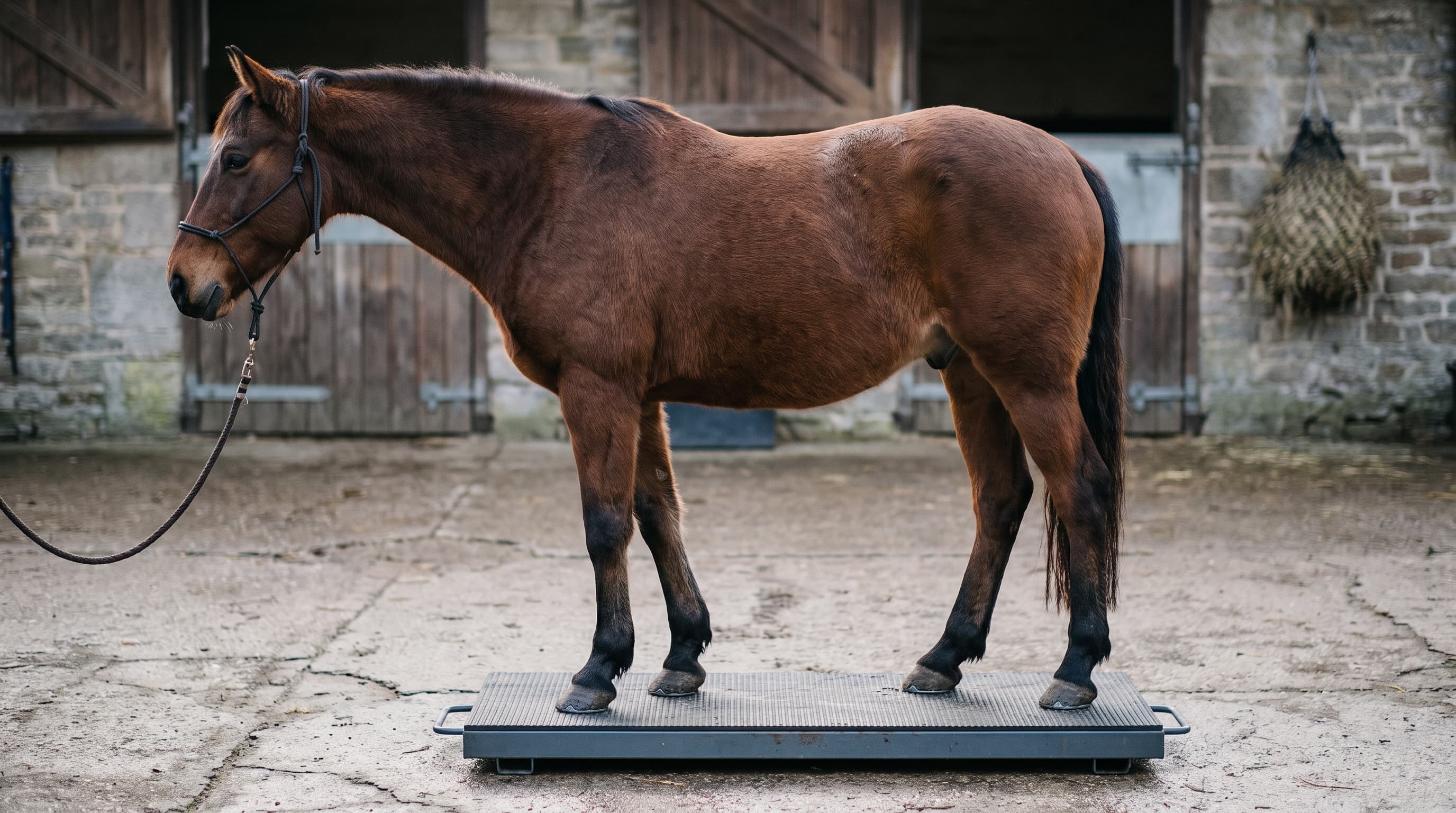
The European College of Equine Internal Medicine's consensus statement on EMS describes it as a collection of risk factors for this endocrine laminitis, and names insulin dysregulation as the most important of them: a horse whose insulin rises too high after it eats sugar and starch. The RVC lists obesity among its features, which is why a cresty neck matters and why the body condition score is worth learning. The consensus statement also says a lean horse can have EMS, so the blood test is your vet's call, not the mirror's.
British cohort data show who carries the risk. In an owner-reported study of 1,070 horses and ponies, Pollard and colleagues (2019) found native pony breeds had a higher rate of laminitis than all other breeds combined, and that recent weight gain and a previous episode both raised the rate further.
| Risk factor (British cohort, 2014–2016) | Hazard ratio |
|---|---|
| Native pony breed (mainly Welsh, Connemara, New Forest, Shetland and crosses), against all others | 1.9 |
| Recent weight gain | 2.3 |
| Previous laminitis, especially an episode no vet diagnosed | 4.5 |
A horse that has had laminitis once is the horse most likely to have it again, and an episode treated at home without a diagnosis is the strongest flag of all.
Autumn and spring grass: the risk does not take a season off
Grass is the trigger most owners think of, and with reason: the sugars and starch in pasture, the non-structural carbohydrates, can bring on laminitis experimentally and can build up to more than 400 g per kilo of dry matter in grass, according to Longland and Byrd (2006). A Royal Veterinary College study summarised in its laminitis research summary found the most cases in May over six years, and more laminitis with more hours of sunshine.
But spring is not the whole story. The same British owner cohort recorded laminitis throughout the year, with no significant difference between seasons. Autumn has its own trap: Oregon State University's guide to pasture-associated laminitis says cold- or drought-stressed grass can carry more sugar than the same grass unstressed, and advises not grazing for several weeks after the first autumn freeze.
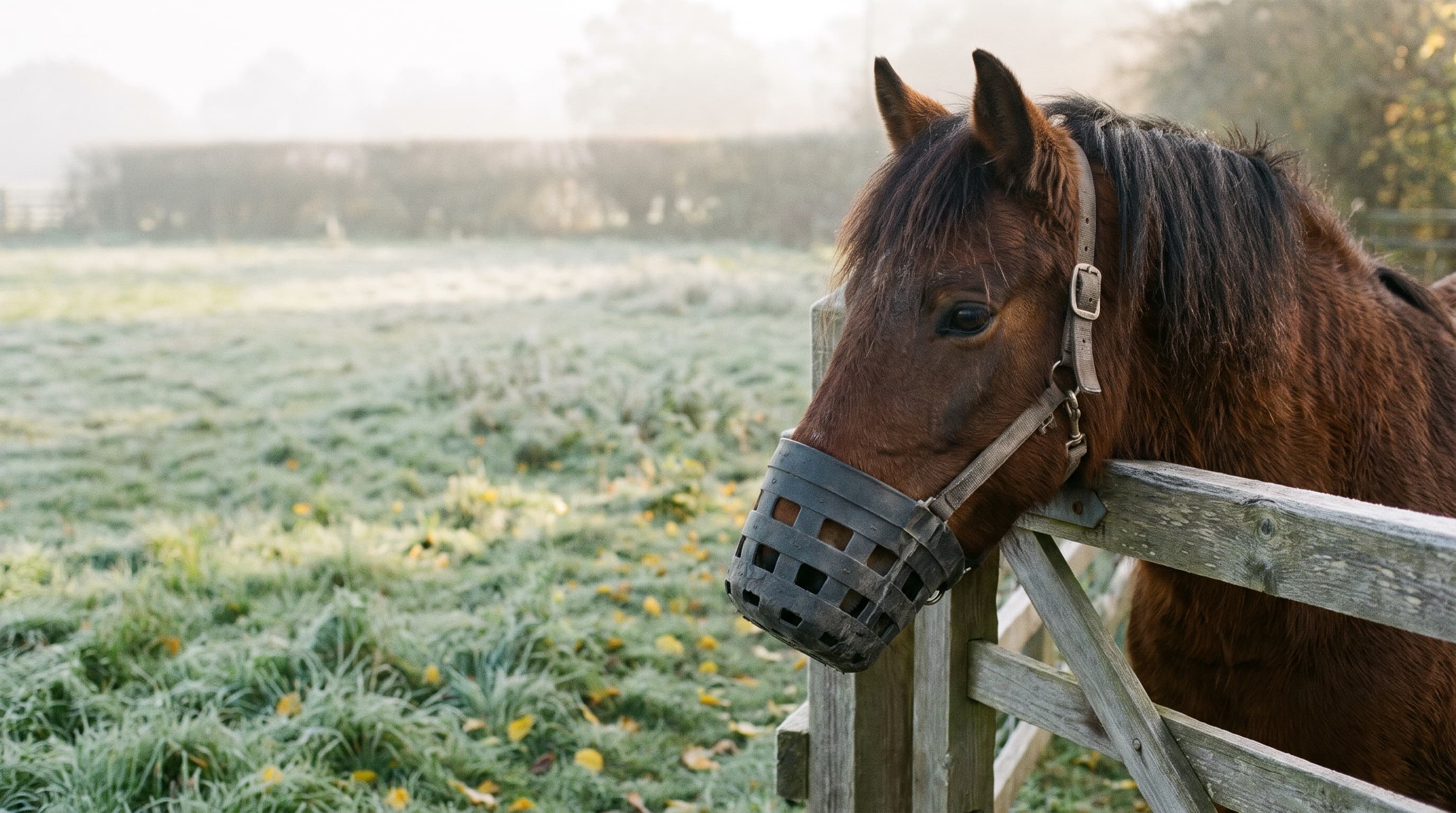
The same guide suggests keeping at-risk horses off pasture from 10 a.m. to 10 p.m., when forage sugar is highest, and using a dry lot or a grazing muzzle when the grass is rich. Those are the levers. How much turnout a particular horse can have is something to settle with your vet, because it depends on the horse's insulin, weight and history.
What the vet and the farrier do
Your vet will confirm the diagnosis, control the pain and look for the cause. Mitchell and colleagues describe the usual tools: anti-inflammatory pain relief, cooling the feet in an ice slurry, support for the frog and heel, a deeply bedded stable, and lateral X-rays to see whether the pedal bone has rotated or sunk. The Merck manual calls cooling the most effective treatment in the early, acute stage. Which drug, at what dose and for how long is your vet's decision.
Once the X-rays show where the bone sits, your vet and your farrier plan the trimming and any shoeing together. The RVC's review of cases managed in first-opinion practice found that, eight weeks after the episode began, 95% of the animals were still alive and 59% were being ridden again, and no single medical therapy or foot-support method did better than the others. Lighter body weight and a milder episode went with survival.
The long game is the cause. If the vet finds EMS or PPID, the plan becomes weight, diet and exercise, set with your vet. Laminitis-related consequences were the commonest health reason behind euthanasia in the British cohort, a quarter of the 80 recorded, according to Pollard and colleagues (2020), which is the case for treating the first episode as the warning it is.
Where Hoofine fits
We are a marketplace, not a clinic, and we cannot tell you whether a horse has laminitis. What we can do is help you find the people who can: the vets and farriers in our directory. If you are buying, ask the seller directly about any previous episode, since a history of laminitis is the strongest risk factor in the table above, and have your own vet look at the feet in a pre-purchase vetting.