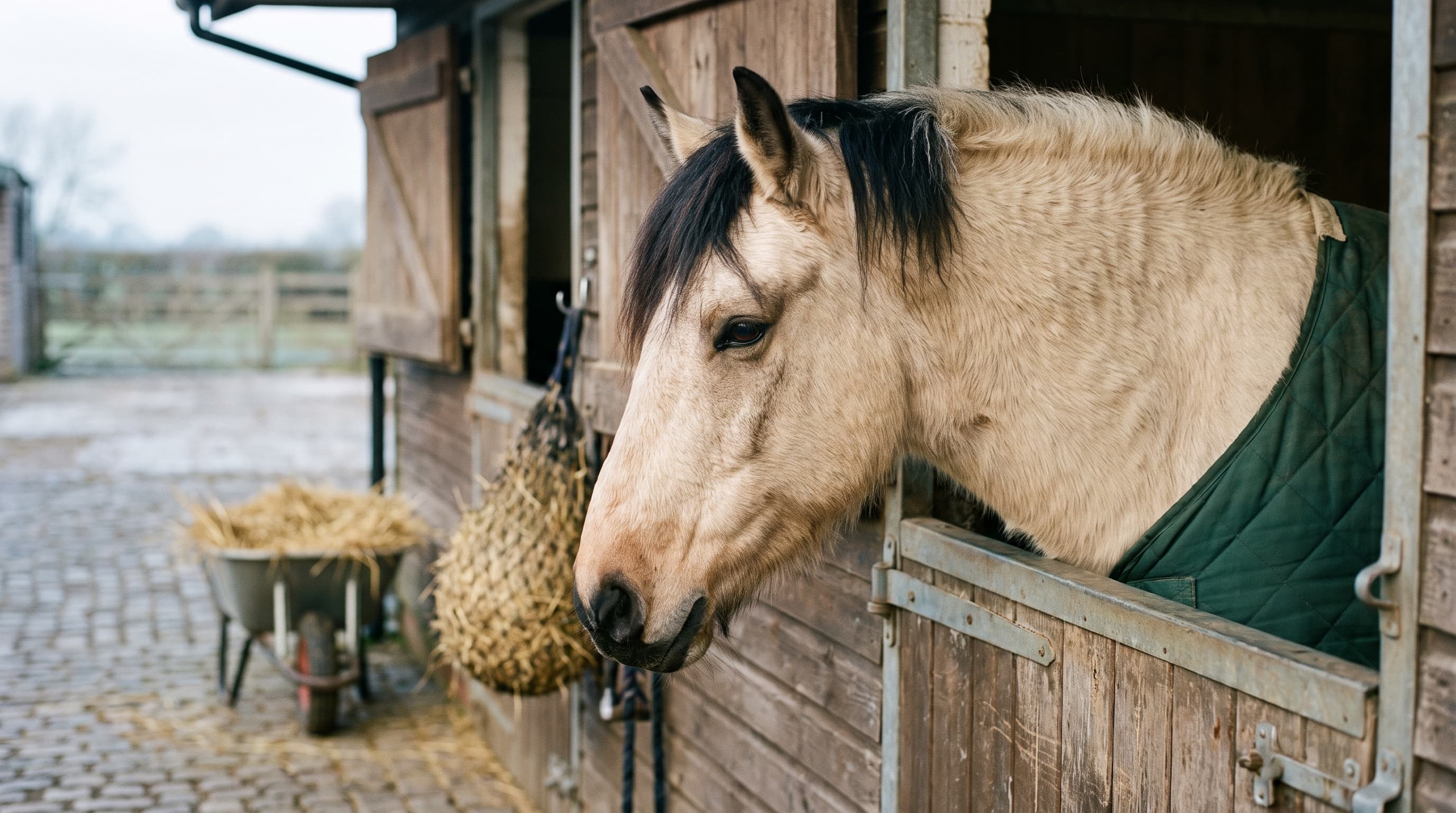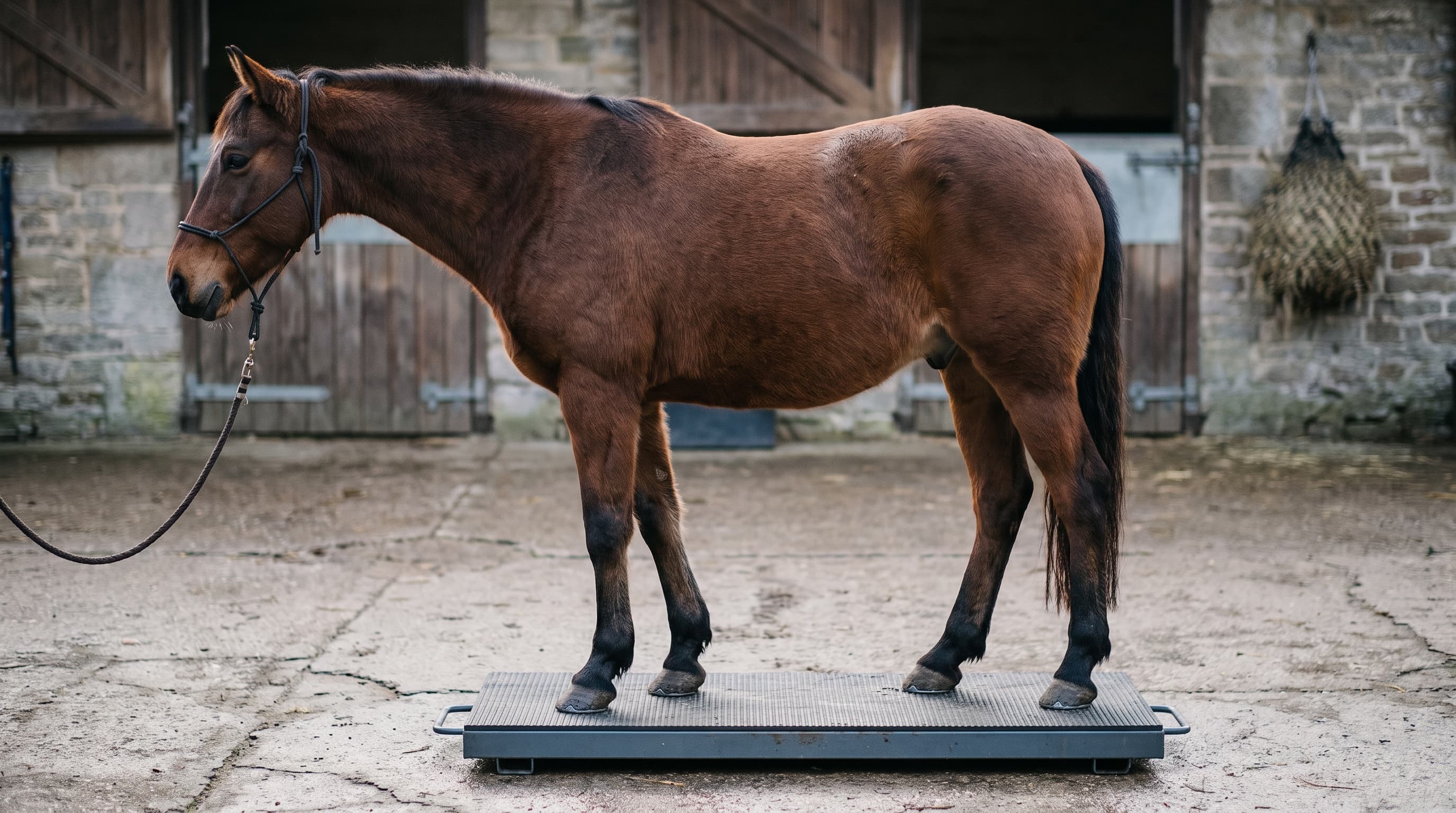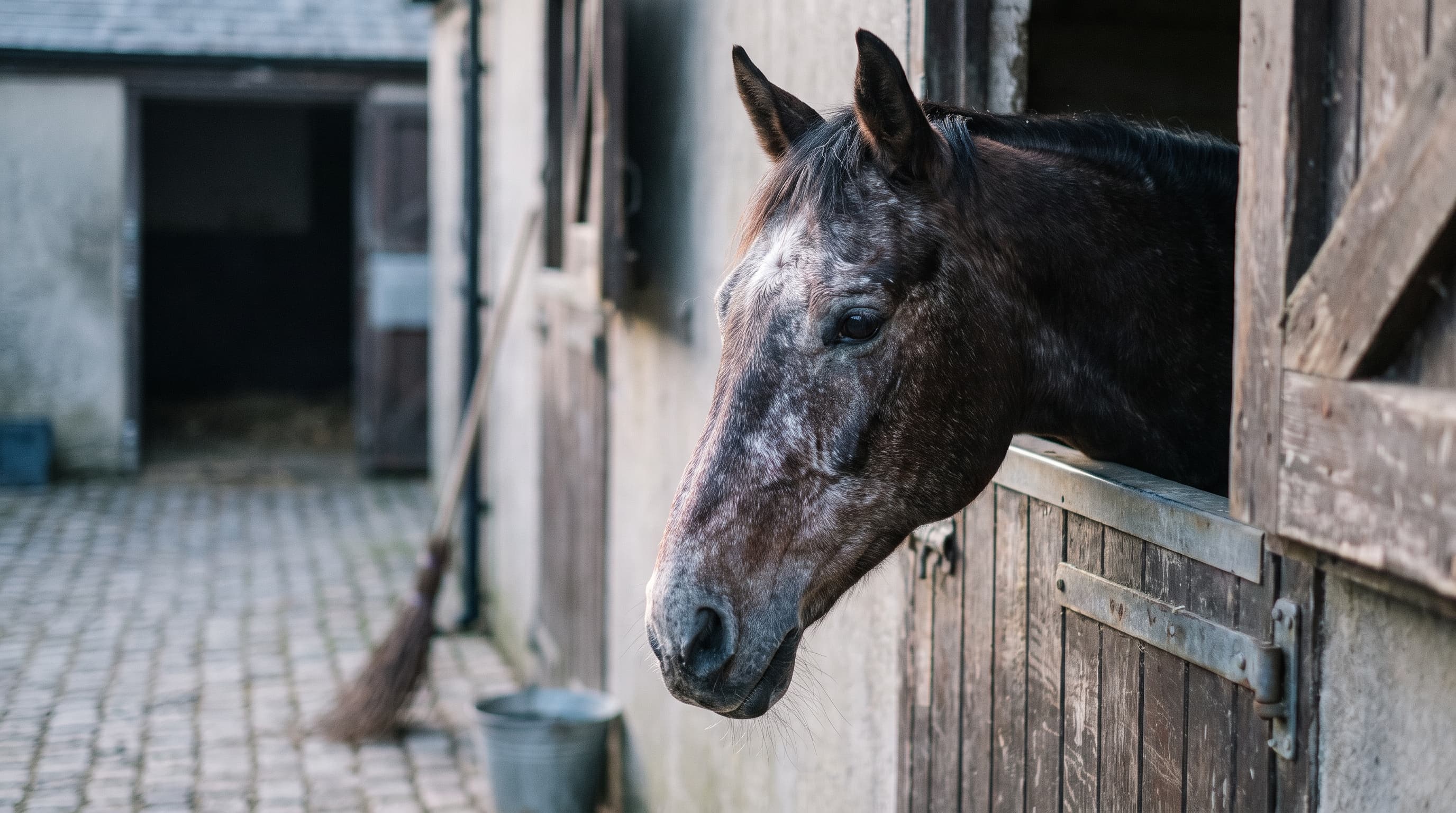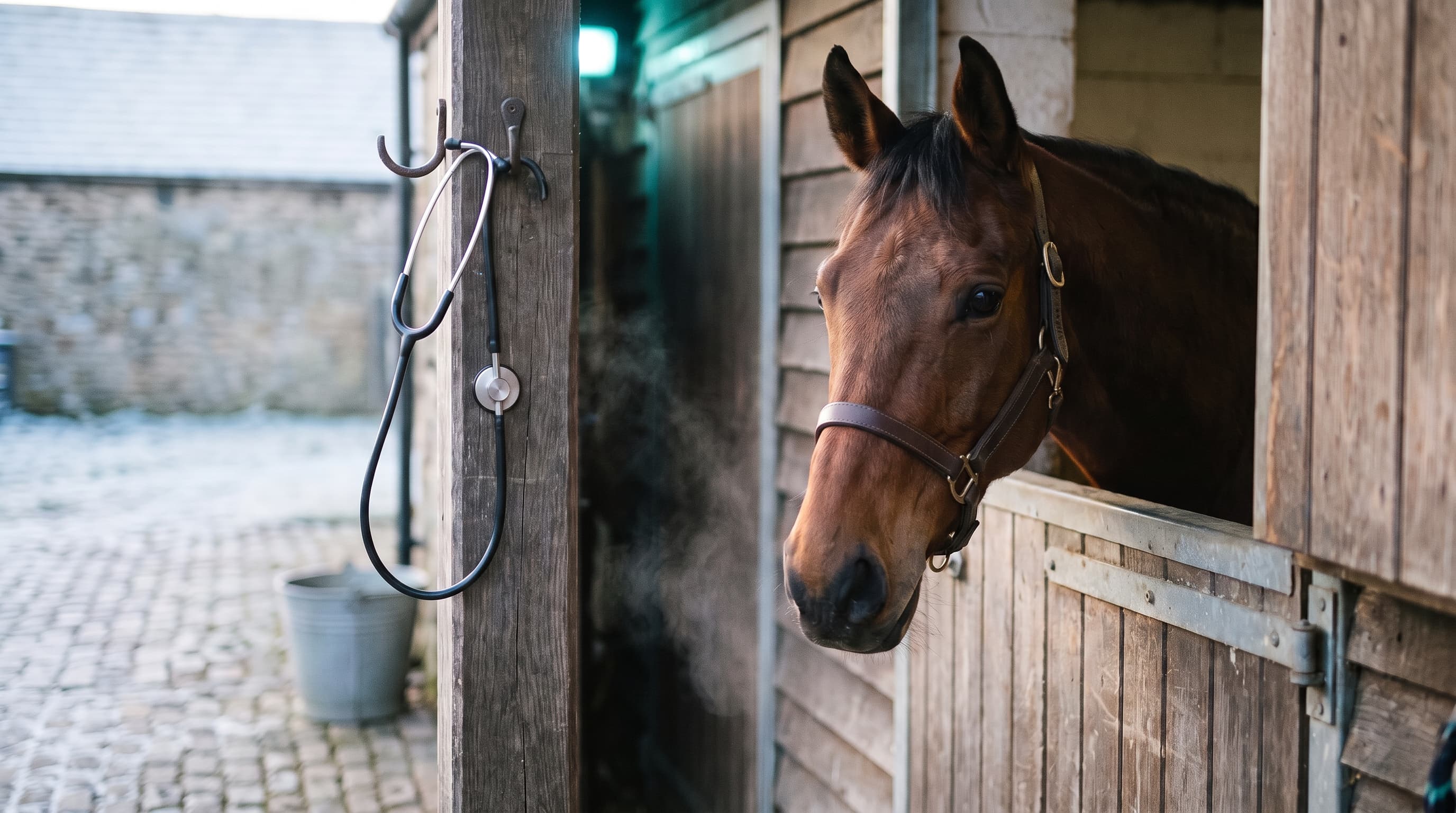
Call your vet now if your horse is restless, rolling, sweating, pawing, looking round at its flank, eating less, passing fewer droppings than usual, or is simply dull and not itself. That is the message of REACT, the colic campaign run by the British Horse Society with the University of Nottingham's vet school, and it covers the quiet horse colic symptoms as well as the dramatic ones. Colic can get worse quickly, and only a vet who has examined the horse can tell how serious it is.
This page does not tell you how to treat colic, and it names no drug and no dose: those decisions belong to your vet. It is for the owner, often in a first winter, who wants to spot the signs early and know what to tell the vet.
The REACT signs, and the ones owners miss
The campaign groups the signs under five letters. Its fact sheet lists the signs under each letter in order of how common and important the Nottingham research found them to be.
| REACT | What you might see |
|---|---|
| Restless or agitated | Trying to lie down, rolling repeatedly, sweating for no reason, box-walking or circling |
| Eating less or droppings reduced | Eating less or nothing, fewer or no droppings, a change in their consistency |
| Abdominal pain | Looking at the flank, pawing, kicking at the belly |
| Clinical changes | Raised heart rate, quieter or absent gut sounds, a change in gum colour, fast breathing, scuffs over the eyes |
| Tired or lethargic | Lying down more than usual, head held low, dull and depressed |
The lists that rank highest for this search give a dozen or more signs and treat them as equal. The research behind REACT says they are not. The classic signs of colic in horses, flank-watching and kicking at the belly, are not seen in every case, so waiting for them can delay the diagnosis or miss it. Eating less and passing fewer droppings are seen more often, and they are the early ones.
What the research found about the quiet cases
In 2014 the Nottingham team asked 1,564 horse owners what they would do about particular changes in their horse. 83% said they would only watch a horse that was quiet or dull. Only 42% would call the vet for a horse that had stopped eating, and only half for one looking at its flank. Most would not call for a horse lying quietly, or one that had rolled for less than five minutes.
The owners were also given three written cases. 94% recognised colic in the case written to match a surgical colic. For the case written as an impaction, a blockage in the large colon, only 44% said it was colic and 9% were sure. That is the form that comes on quietly.
In a UK study of 1,016 horses seen by 167 vets for colic, 23.6% of the cases with a known outcome were critical: they needed intensive treatment or surgery, or the horse died or was put down. In 941 out-of-hours colic visits at two practices, 23.9% were critical and 18% of the horses were put down. The authors of the first study noted that some horses were already as ill at the first visit as horses arriving at a referral hospital, and asked for better owner education on recognising colic and getting help.
We looked for a study that measured how long owners wait before they call, and did not find one. What a 2026 survey of 1,544 UK owners did find is that 58% did not know how quickly the gut can be damaged beyond repair.
Horse colic symptoms to note for the vet before they arrive
Once the call is made, collect facts, and only if it is safe. The British Horse Society is plain about this: if the horse is throwing itself about, do not try to take its pulse or temperature, and wait for the vet. If the horse is standing quietly, these are the readings and observations vets ask for.
| What to check | Normal adult horse at rest |
|---|---|
| Heart rate | 28 to 44 beats a minute |
| Breathing rate | 8 to 16 breaths a minute |
| Rectal temperature | 36.5 to 39.0 °C |
| Gums | Pink and moist; the REACT sheet calls dark red gums a sign of a serious problem |
| Droppings | Around 8 to 10 piles a day, formed and moist |
The heart, breathing and temperature ranges are the ones the Nottingham owner study took from five veterinary textbooks. Only 45% of the owners in it could give a normal horse heart rate. The droppings figure comes from the University of Minnesota's first-aid guide, written by a vet. Your own horse's numbers matter more than any range, so take them on a quiet day and write them down.
Gut sounds are worth a listen on both sides of the belly, high and low. In the study of 1,016 horses, silence in even one of those four areas was one of the strongest signs of a critical case, along with a raised heart rate, a slow return of colour to the gum after pressing it, a weak pulse and the level of pain. A normal reading is not an all-clear. Guidance from the Japan Racing Association's equestrian park warns that a horse with a twisted gut can have only a slightly raised heart rate early on.
The same guidance lists what a vet will ask, so have the answers ready: when it started, how bad the pain is, what the horse is doing, when it last passed droppings and what they looked like, whether it has eaten and drunk, any recent treatment, and any recent change in feed, routine or surroundings.
Why the first winter raises the risk
The evidence we found points at what changes in winter, turnout, feed and water, rather than at the cold itself. In the study of 1,016 horses, 47% of the cases with a recorded history had had a recent change in management, most often in diet or bedding or in turnout. A review of the risk-factor studies found the strongest evidence for changes in feed and recent changes in housing. One Texas study it includes found about three times the risk after a recent cut in pasture time.
For many horses autumn means more time in the stable. When Nottingham researchers moved seven horses from pasture into stables, their droppings fell by more than half by weight, became drier, and the large colon moved less, with the biggest changes in the first five days. Impaction colic in horses is the type the British Horse Society links with a move to a drier diet such as hay and box rest, and it tends to show as low-grade pain with subtle signs: the horse colic symptoms the owners in the Nottingham survey were least sure of.
Water is the other half. In an Austrian hospital study, drinking less was the risk factor that held up most clearly. The British Horse Society notes that horses may drink less in cold weather and when water freezes. Check that every bucket and trough has water a horse can actually drink, morning and evening, and make changes to feed and turnout gradually; the society suggests over at least 10 to 14 days. How much forage that means is in how much hay a horse eats.
Decide the hard part while the horse is well
Some colics need surgery at a referral hospital, and the British Horse Society suggests keeping an emergency care plan with your horse's normal temperature, pulse and breathing written on it. Cost belongs on that plan too. In a 2024 survey of 18 UK referral hospitals, horses that came through colic surgery cost a mean of £7,905, from £3,023 to £20,343, and the maximum cover offered by the five insurers studied was £5,000 to £7,500. Those are British figures; prices elsewhere differ.
Know whether your insurance covers surgery and up to what amount, whether you would agree to it, and how the horse would travel. In the 2026 survey, owners were less likely to agree to referral for an older horse and more likely when the horse was insured. Both are better decided on a calm afternoon than at midnight.
While you wait for the vet
Do what your vet tells you on the phone, and nothing more. When the Nottingham group asked practices what they tell owners while they wait, the advice most often given was about safety, walking and removing food, and how long to walk differed from one answer to the next. That is a good reason to ask your own vet rather than follow a website. Give no medicine unless the vet asks you to.
One thing the British Horse Society does say plainly: letting a horse lie down or roll does not make colic worse. Move buckets, haynets and anything else it could hurt itself on, keep yourself out of harm's way, and keep watching so you can tell the vet what changed.
Where we fit
Hoofine cannot tell you how serious the horse colic symptoms in front of you are, and no website can. What it can do is help you find an equine practice near you in the vets directory before you need one. Save the number in your phone today, next to your insurer's.