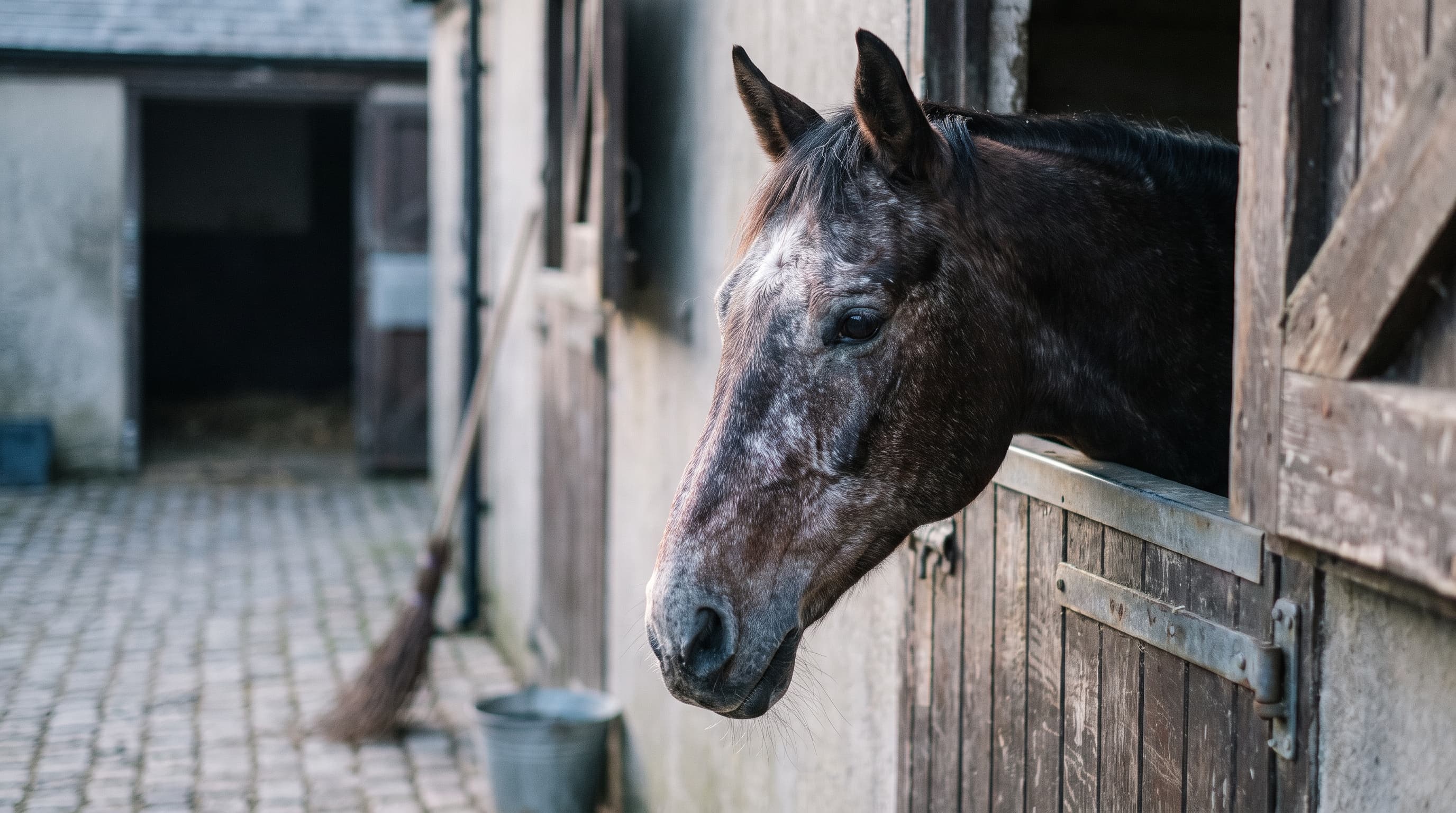
The advert says sixteen, sound, "plenty of years left in him", and he is priced well below the eight-year-olds on the same page. Whether that is a bargain turns on a question the seller cannot answer for you: how long do horses live, and how many of those years are working ones.
This is for the first-time buyer reading the age in an advert. It covers what the studies that counted deaths found, what "old" means to vets, owners and other buyers, how far to trust the age you are given, and what you take on at the far end.
How long do horses live when somebody counts
The figure repeated everywhere is 25 to 30 years. A 2020 review in the journal GeroScience gives an average of 20 to 30 years and a maximum over 40. That describes how long a cared-for horse can live. The studies that counted deaths across a whole population found something lower.
France is the only country where we found national figures. Its national horse institute, the IFCE, puts life expectancy at 18 years: nearly half of French equids die before 18 and one in five reaches 26. Researchers who matched four years of rendering-plant records to the national horse register found a median age at death of 14.3 years for riding-type horses and 16.9 for ponies, among animals that had reached the age of two. Those are deaths at home from illness, accident or euthanasia. Horses sent to slaughter, about 30% of French equine deaths, are not in the figures, and the pony number rests on the minority of ponies with a recorded birth date.
In Sweden, a study of horses with full life insurance put the median age at death at 18.8 years, with joint problems the commonest cause. The same research group warns that insurance records run out with age, because life cover tends to end at a set age, so they say little about the oldest horses.
So the midpoint in the counted populations sits between 14 and 19 years, not at 25 to 30. Thirty is possible, and no advert can promise it.
Horse lifespan by size and breed, and the record
Ponies tend to outlive horses, and that is about as far as the evidence goes. The French pony median was the highest of any group, and a US veterinary hospital found ponies significantly over-represented among its patients aged 30 and over. The tables that give a horse lifespan breed by breed have no study behind them that we could find.
The record belongs to Old Billy, a barge horse from Lancashire foaled in 1760, whose 62 years Guinness World Records lists as the greatest age reliably recorded. AnAge, the database researchers use for species' lifespans, is less sure: it calls that record unverified and takes 57 years as the horse's maximum. Either way, it says nothing about the horse in the advert.
Horse years to human years: a chart without a study
The rule usually quoted, six and a half human years for each of a horse's first four and two and a half for each year after, reached owners as a trade-press announcement, and we found no peer-reviewed study that derives or tests it. The one published method that puts both species on a single scale, in a 2022 paper in Nature Communications, divides age by the longest recorded lifespan: 57 years for a horse, 122.5 for a person.
Run both on a 20-year-old horse. The rule gives 4 × 6.5 + 16 × 2.5 = 66. The paper's scale gives 20 ÷ 57 = 0.35, and 0.35 × 122.5 = 43. That sum is ours, not the authors'. Converting horse years to human years is a figure of speech, and it tells you nothing a vet's examination would not tell you better.
When a horse counts as old
| Who draws the line | Age |
|---|---|
| Researchers studying "geriatric" horses | 15 |
| Buyers, for whom age starts to count against a horse | about 16.5 |
| Owners, describing their own horse as old | about 22 |
The second and third rows come from one American survey published in 2003, so read them as a pattern, not a rule. Still, the sixteen-year-old sits exactly where buyers begin to mark a horse down, which is part of why he is cheap.
How long he will work is a different question. In a survey of 2,717 owners of US horses aged 15 and over, four in ten of the horses were fully retired, and most (61.5%) had been retired between the ages of 15 and 24, mainly for health problems. No veterinary body publishes an age at which a horse should stop being ridden. What this particular horse has left is a question for the vet at a pre-purchase vetting, not for the calendar.
What the late years ask of you
When vets examined 200 British horses aged 15 and over, 95.4% had dental abnormalities and 50.5% were lame at trot. About one horse in five of that age has PPID, the hormonal disorder often called Cushing's, on the best available estimate. The same researchers found that routine vet, farrier and vaccination visits fell away as horses aged, and that owners missed much of what the vets found.
Nobody publishes what an old horse costs to keep, so we will not invent a figure. The bills that grow are the vet's and the dentist's, on top of the ordinary monthly cost. Insurance shrinks at the same time. NFU Mutual's policy booklet, to take one large British insurer, lets standard cover for illness start only up to the age of 19; its veteran cover, which can start between 16 and 30, pays vet's fees for accidents alone. Read the age limits in a policy before you buy the horse.
How far to trust the age in the advert
Not on the teeth. When four experienced equine vets estimated the ages of 434 Thoroughbreds of known age from their teeth, the result was large discrepancies that grew as the horses got older, and the authors concluded that dental ageing is no more than an informed guess. In the same series of papers Galvayne's groove, the mark every horse book teaches, proved to be of no value.
That leaves paper. In the EU a horse must be identified within twelve months of birth, so a passport issued on time carries a birth date given at the time. One marked duplicate or replacement means the horse was identified late or its first papers were lost, and the birth date in it deserves a second look. In the US, where we found no equivalent national passport, the age is only as good as the registration papers, if there are any. Ask for the document before you travel, and have the vet scan the microchip against it.
The end of a horse's life is your decision
England's official welfare code says that only 9% of horses die of natural causes, and calls planning for euthanasia a key responsibility of ownership. In a British study that followed 908 horses aged 15 and over, 94% of deaths were euthanasia, most often for lameness or colic. Buying a horse means accepting that you will probably make that decision, pay for it and arrange what follows. The code warns that insurance rarely covers the full cost.
The rules are national. In Britain the passport goes back to its issuer within 30 days of the death; a horse signed out of the food chain can never re-enter it; and burial is allowed for any horse in England but only for pet horses in Scotland and Wales. In the US, disposal is a matter of state and local law, and renderers and landfills may refuse a horse put down with barbiturates. France and the Netherlands forbid burying a horse at all. In Germany, killing a vertebrate without reasonable cause is a criminal offence under section 17 of the animal welfare act, which the veterinary welfare association there reads as ruling out euthanasia for a horse that is merely unwanted. Ask your vet how it works where you live, while the horse is well.
Where we fit
Hoofine cannot tell you how long a horse will live, and an advert cannot either. What the site can do is show the age beside the price on the horses for sale, let you say on the Wanted board what age you are looking for, and point you to vets and insurers to ask before you commit. What age does to the asking price is covered in how much a horse costs to buy.