You have ridden school horses for a couple of years, your instructor thinks you are ready, and every advert you open says "ideal first horse". So you search for the best horse breeds for beginners and find the same handful of names on every list. Those lists are right about a tendency and wrong about what it promises: a breed tells you what a horse was bred to be, and nothing about what this one has been taught.
This is for the rider buying a first horse of their own. It covers what research says a breed predicts, what the breed societies themselves claim, two labels that are not breeds at all, and the things that decide a first year more than any label does: age, training, size and a proper trial.
What a breed can and cannot tell you
Breed differences in temperament are real, and they have been measured. Lloyd and colleagues collected personality questionnaires on 1,223 horses of eight breeds and found that anxiousness and excitability varied most from breed to breed, while dominance and protectiveness varied least. A later American survey with 847 responses, by Sackman and Houpt, put Arabians, Thoroughbreds, Saddlebreds and Walking Horses at the nervous end and Quarter Horses, Paints, Appaloosas and draught horses at the calm end.
Read those findings with their limits. Both rest on owners rating their own horses, and both report averages, so neither says anything about the horse in a particular advert. When another team put 702 horses through standardised behaviour tests instead, it found that breed and sire mainly influenced how a horse reacted to something new, while the type of work it did counted for more in how it learned and how it coped with being separated from other horses. Breeding sets a starting point. Handling and work move it.
The best horse breeds for beginners, in their societies' own words
The names on the lists are not invented. Each of these breeds has a society whose own standard or breed description talks about temperament. This is what those documents say, which is not always what the lists say about them.
| Breed | What its society says | Height it gives |
|---|---|---|
| Quarter Horse | The American Quarter Horse Association's rulebook: "bred and developed to have a kind and willing disposition" | None in that statement |
| Morgan | The American Morgan Horse Association's judging standards: "intelligence, willingness, zest for life, and good sense", and a "tractable temperament" | 14.1 to 15.2 hands, "with some individuals under or over" |
| Icelandic | FEIF, the international federation: "friendly, adventurous, intelligent and quick to learn" and "in general very easy to handle" | Generally 125 to 145 cm, says the US Icelandic Horse Congress |
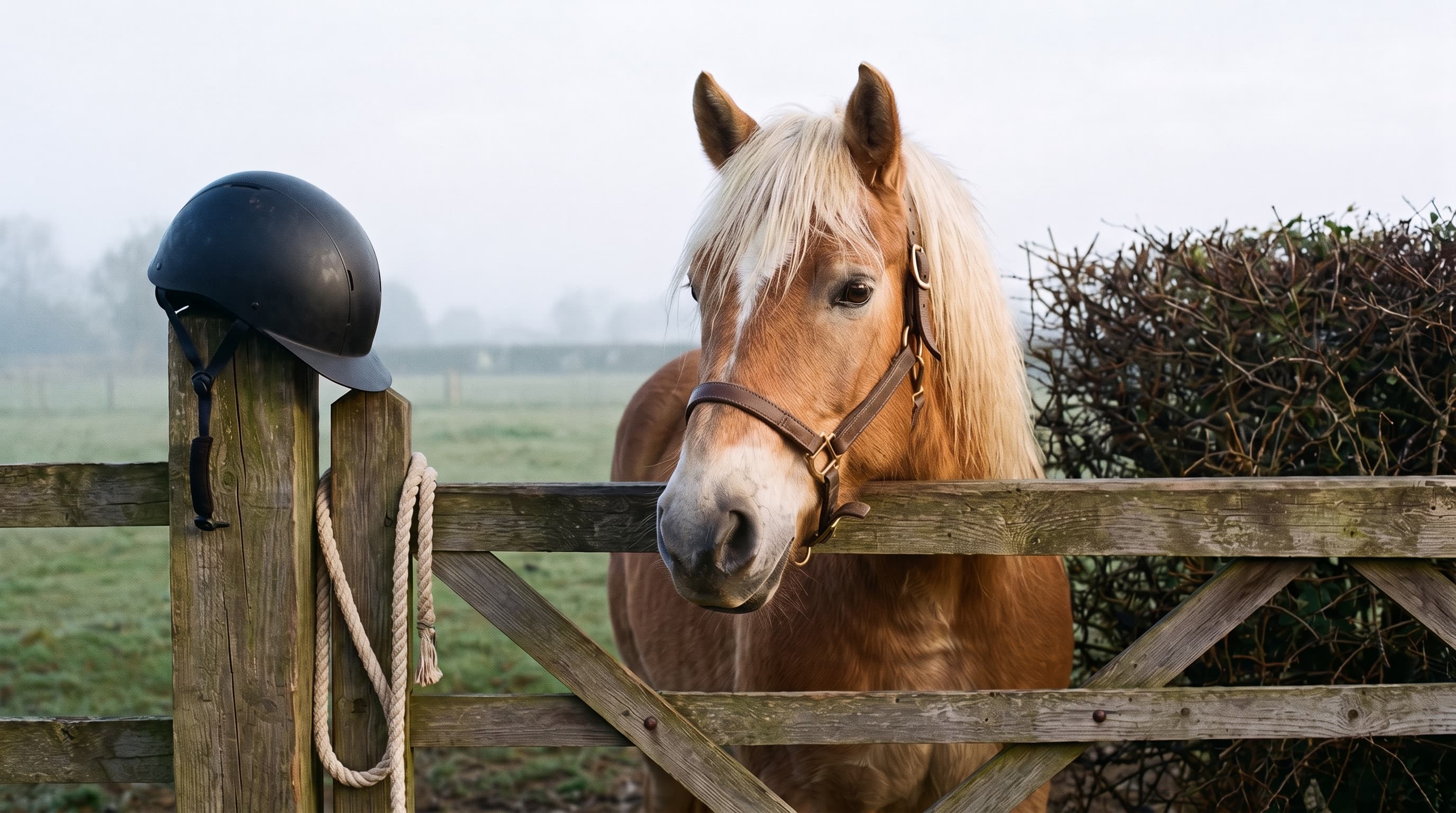
| Haflinger | The Haflinger Society of Great Britain's breeding aims: "noble, sweet-natured, undemanding, capable and motivated", for riding and driving "by children and adults" | At least 137 cm, with 147 to 152 cm desired, in Italy's 2026 breeding norms |
| Connemara | The breed standard: "Good temperament, hardiness and staying power", and "suitable for child or adult" | 128 to 148 cm |
| Welsh pony and cob | The Welsh Pony and Cob Society's breed descriptions: "Hardy, spirited and pony-like" for the Mountain Pony, "Strong, hardy and active" for the Cob | Up to 12 hands (Section A), up to 13.2 (B and C), over 13.2 with no upper limit (D) |
| Irish Draught | The Irish Horse Board: "Known for its good temperament, docility and willing nature" | 158 to 170 cm |
Two things stand out. The societies do not describe placid animals: the Welsh word is "spirited", and Italy's Haflinger norms ask for a temperament that is docile "ma sufficientemente energico", docile but energetic enough. And every line in that table is a breeding aim or a judging ideal. It describes what breeders are selecting for, and it is no warranty on the six-year-old in the advert.
Cob and schoolmaster are not breeds
Two of the commonest recommendations are not breeds. A cob is a body type: the British Show Horse Association's rule book calls it "a type rather than a breed", a short-legged animal with bone and substance that "should be well mannered and ideal for nervous or elderly riders". That is a show-ring ideal for a shape. A cob-shaped horse of unknown breeding has made no promise about its manners. The Welsh Cob, Section D of the Welsh stud book, is a breed, which is where the confusion starts.
A schoolmaster is a description of education: an older horse that knows its job well enough to teach a rider. No registry awards the word and no test stands behind it. Ask what the horse has done, for how long and with whom, and then watch it do it.
Why age and training outrank the best horse for beginners
The classic first-horse mistake has nothing to do with breed. The British Horse Society's guide to buying a horse tells first-time owners to avoid very young, unbacked or green horses and to choose one with steady experience of being ridden. Rutgers University's extension fact sheet is blunter: an inexperienced horse should never be bought for an inexperienced rider, and only experienced riders can train a young horse. A four-year-old Haflinger is still a four-year-old.
Rutgers adds a point worth money: an older horse often costs less and has more training behind it than a younger one of similar quality, which changes the sums in what a horse costs to buy. The same reasoning cuts the other way for the hot-blooded breeds. Arabians and Thoroughbreds sat at the nervous end of the American survey, which is why the lists leave them off, but that is an average too. Judge the horse's years of steady work before its stud book.
Size: height, and what a horse can carry
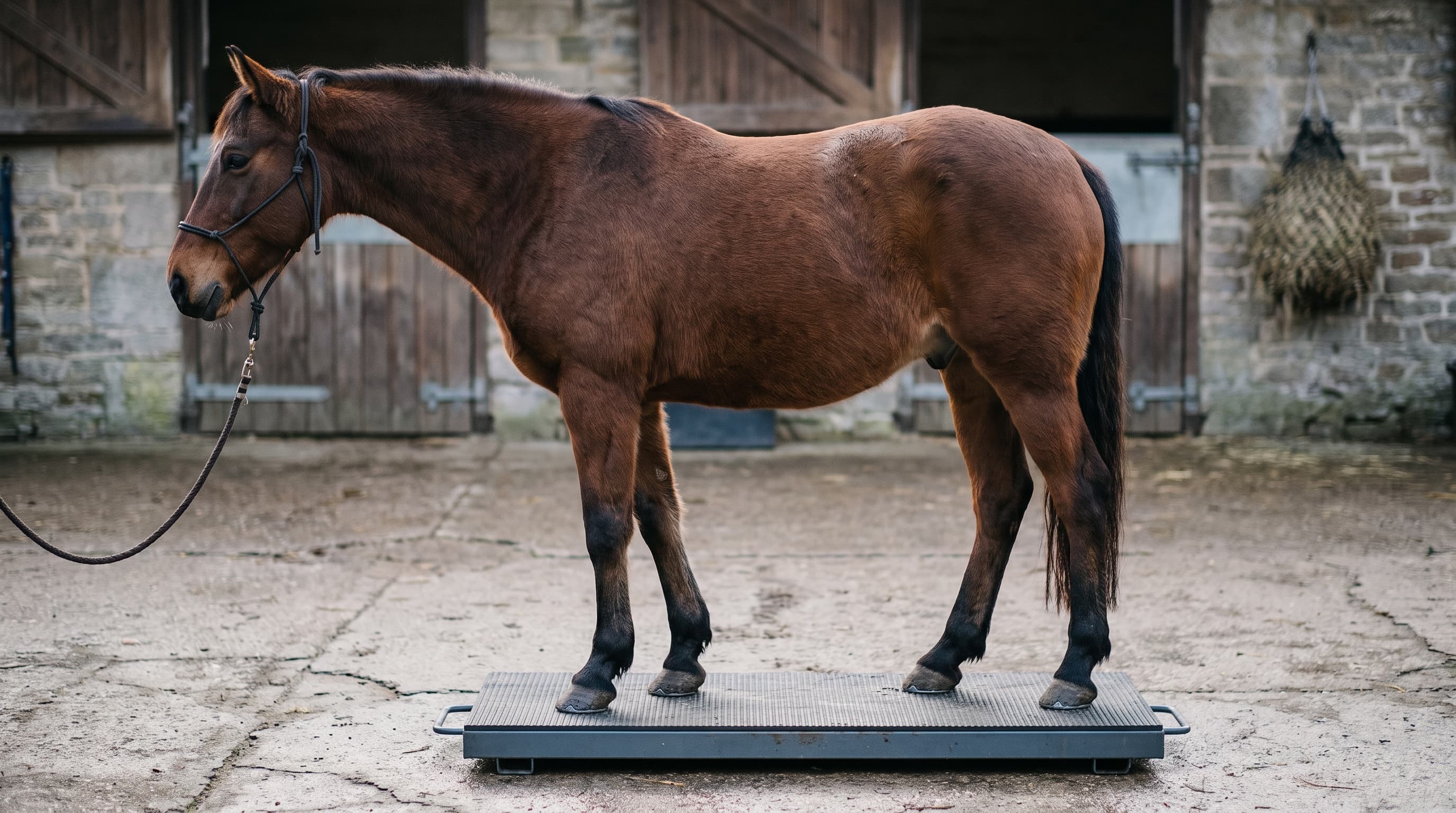
Height matters less than the lists suggest. The Connemara standard says "suitable for child or adult" of a pony that stops at 148 cm, and the US Icelandic Horse Congress says the Icelandic's size suits both adults and children. What matters is whether this horse can carry you. The British Horse Society says there is "no one formula that fits all": it depends on the horse's age, conformation, muscle, fitness and breeding, and on the rider, because beginners tend to be less balanced and an unbalanced load is harder to carry.
The society gives no percentage. Germany's veterinary welfare association, the TVT, does: its 2019 leaflet calls a load of about 15 per cent of the horse's body mass, rider and tack together, realistic and acceptable, and treats 25 to 30 per cent as contrary to animal welfare. The best-known experiment is a 2020 pilot study by Dyson and colleagues, in which four riders of different weights each rode six horses. All thirteen tests with the two heaviest riders, who weighed 15.3 to 17.9 per cent and 23.6 to 27.5 per cent of their horses' bodyweight, were stopped early, twelve of them for temporary lameness. One of twelve was stopped with the moderate rider. The authors name their own limits: saddles that did not fit every pairing, and stopping criteria that were subjective. Treat the figures as a warning, not a threshold, and if you are unsure about a particular horse, ask your vet and a saddle fitter before you buy.
Try the horse, then have it vetted
The trial is where temperament shows. The British Horse Society's advice is to watch the horse being caught, groomed and tacked up, to have the seller ride first, and then to do the kind of riding you actually plan to do. Rutgers suggests going back to ride several times, at different hours, and taking the horse out past cars, bicycles and dogs. Take your instructor; if you have none, a trainer who does not know the seller is worth the fee. Any trial period belongs in writing.
A vetting comes after that, and it answers a different question. Utah State University Extension notes that a pre-purchase examination is the best protection on health and soundness but "may not be a complete evaluation on temperament, training and skills level". What a vetting covers is set out separately. If you are still unsure whether you want a horse of this kind at all, loaning one first is a cheaper way to find out.
Where we fit
Hoofine cannot tell you what a horse is like to ride, and "suitable for a beginner" in a listing is the seller's description, not something we test. What the site can do is narrow the search: horses for sale can be filtered by breed and age, and a post on the Wanted board lets you describe the age, schooling and size you need and leave the breed open, which is usually the better brief.